

Written by Jason Pohlonski, Founder & Executive Director.
Comfort Gifts for Adults Going Through Cancer Treatment: What Families Should Consider
The best comfort gifts for someone going through cancer treatment are usually simple, practical, and chosen around the person’s preferences, treatment environment, and comfort. A soft blanket, a book they want to read, or a gift card for an everyday expense may be appreciated more than an elaborate gift basket.
If you are looking for comfort gifts for adults with cancer, start with the person you know: what they enjoy, what they already have, and what would be easy to use. You do not need an expensive gift to offer thoughtful support.
Why Comfort Matters During Treatment
Treatment days can sometimes be long, tiring, cold, or repetitive. Familiar belongings, something enjoyable to do, and practical conveniences may help someone feel more comfortable during an appointment or at home afterward.
Cancer treatment comfort gifts do not need to promise a health benefit. Their purpose can simply be warmth, familiarity, distraction, or one less thing to organize. The American Cancer Society’s guidance on being a friend to someone with cancer also encourages small, practical gifts shaped around the person’s everyday life.
Warm and Cozy Items
Treatment centers may be cool, and some patients appreciate warm, soft items. Possibilities include:
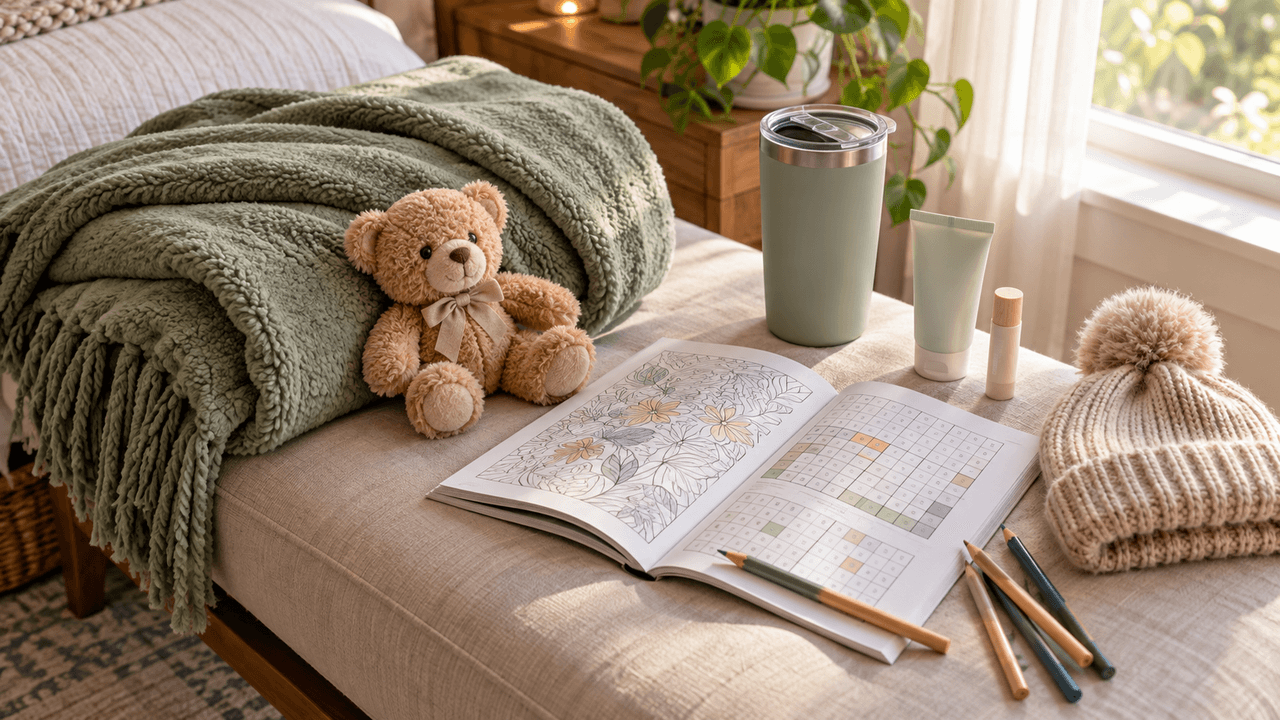
- A soft, washable blanket that fits easily in a bag.
- A knit hat in a fabric and style the person likes.
- Comfortable socks in the right size.
- A small pillow that is easy to carry.
- A plush or weighted stuffed animal, if the person would welcome one.
Choose textures they enjoy, and consider how easily an item can be cleaned and carried. A large blanket or bulky pillow may be inconvenient for someone traveling to appointments.
Some people may simply find the added weight of a weighted stuffed animal comforting. Others may prefer a lightweight plush animal or no stuffed animal at all. Ask before buying a weighted item, and check with the person’s care team if there are questions about whether it is appropriate. These items are gifts for personal comfort, without claims that they treat anxiety, pain, nausea, or other symptoms.
Skin-Friendly Personal Care Items
Fragrance-free lotion, sensitive-skin moisturizer, lip balm, or gentle hand cream may be appreciated by someone who already uses and likes those products. A familiar product can be a more thoughtful choice than a new luxury set.
Ask about fragrance sensitivities and preferred products first. Check treatment-center policies as well, since scented items can affect people nearby in a shared space. Packaging described as gentle or sensitive-skin does not mean a product will suit everyone.
If the person has questions about a product during treatment, leave that decision to them and their care team. A comfort gift should not become a recommendation for medication or a medical skin treatment.
Activities and Distractions for Long Appointments
When deciding what to give someone going through chemotherapy or another cancer treatment, consider something that can be picked up and put down easily. Some people want an activity; others prefer to rest.
Cancer patient gift ideas may include:
- Puzzle books, coloring books, and colored pencils.
- A book, magazine, or journal suited to their interests.
- Headphones for their own music or entertainment.
- Downloaded movies or audiobooks, with permission and help setting them up if wanted.
- A simple game they can enjoy alone or with a companion.
These may help pass time during long appointments or treatment sessions. Consider the available space, whether headphones are comfortable, and whether the person wants to use a screen. Check before purchasing a subscription that could create future charges or require extra setup.
Snacks and Drinks: Ask First
A favorite snack or drink may be welcome, but ask before assembling a food basket. Dietary restrictions, treatment side effects, facility rules, and personal preferences can vary. Something a person usually enjoys may not appeal to them that day.
Ask what sounds good now, whether outside food is allowed, and whether anything needs refrigeration. A reusable water bottle or tumbler may also be useful if they want one and can comfortably carry and clean it.
Let the person and their care team guide food and drink choices. You do not need to select special foods or offer nutritional advice to give a thoughtful gift.
Practical Gift Cards
Some of the most useful gifts for cancer patients support ordinary routines. Consider gift cards for:
- Restaurants the person already enjoys.
- Grocery stores they use.
- Gas stations convenient to their route.
- Meal delivery available at their address.
- Transportation services they can access.
- A favorite coffee shop.
Check service areas, fees, expiration terms, and how the card can be redeemed. Choose an option that does not require the recipient to spend more money to use it. Practical support can reduce small everyday burdens while leaving the person in control of what they choose.
Ask Before Buying
The most thoughtful gift is not always the most expensive one. Asking a few direct questions can prevent an unwanted purchase and make the gift more personal:
- What would actually be useful?
- Are there scent sensitivities or products you prefer?
- Are there dietary restrictions I should know about?
- Does the treatment center allow outside food?
- Would you prefer something practical, comforting, or entertaining?
You can offer a simple choice: “Would a small blanket, an audiobook, or a grocery gift card be most useful?” Make it easy for the person to suggest something else or decline. Avoid asking them to build a long shopping list or explain private medical details.
For more ways to offer practical help alongside a gift, read how to help an adult with cancer during the holidays.
Treatment-Center Rules Matter
Hospitals and cancer centers may have rules about food, fragrances, flowers or plants, and other outside items. Infection-control considerations and shared treatment spaces may also affect what can be brought in.
Before delivering a gift to a facility, check its current guidance when appropriate. Ask whether items must be new or washable, whether there are size limits, and whether deliveries are accepted. Do not assume a rule at one location applies everywhere.
If an item cannot go into the treatment area, ask whether the person would enjoy it at home instead. Keep the gift easy to store and transport, and avoid creating an extra errand for the recipient or caregiver.
Comfort Can Look Different for Everyone
One person may love a warm blanket. Another may prefer headphones, a book, a favorite snack, or simply having someone sit with them. Gifts for adults going through cancer treatment should reflect the individual, including their interests beyond cancer.
A short visit, an agreed-upon ride, or help with an errand can also be a gift. Follow the person’s lead about company and conversation, and make plans easy to change. Let them know there is no expectation of a thank-you note or a photo of the gift being used.
How One More Moment Is Exploring Comfort Support
One More Moment is a Michigan nonprofit that supports adults facing Stage IV, advanced, or metastatic cancer. The organization is currently exploring ways to support adults receiving cancer care in West Michigan during the holiday season.
As part of that exploration, One More Moment is listening to oncology professionals and people who work directly with patients to better understand what items are genuinely useful and appropriate. This is an exploratory effort, and a specific holiday comfort program has not been approved or announced.
Families interested in a meaningful experience with loved ones can learn about adult cancer wishes in Michigan or Request a Moment. Requests depend on eligibility, timing, logistics, and available resources.
Professionals can also read how cancer centers can help adults with cancer find wish support. Anyone who would like to support the organization’s broader work can donate to One More Moment.
Start With the Person
When choosing gifts for someone with cancer, ask what would be welcome, check any relevant facility rules, and choose something manageable for your budget and their routine.
The goal does not have to be complicated.
Sometimes a small, thoughtful item can simply make a long day feel a little more comfortable.
About the Author
Jason Pohlonski is the Founder and Executive Director of One More Moment, a Michigan nonprofit organization helping adults facing Stage IV, advanced, or metastatic cancer create meaningful Moments with the people they love.
About One More Moment
One More Moment is a Michigan nonprofit organization helping adults facing Stage IV, advanced, or metastatic cancer create meaningful Moments with the people they love.
- Website: One More Moment
- Email: contactus@onemoremoment.org
- EIN: 47-4466426
- Candid/GuideStar profile: One More Moment
- Privacy Policy: Read the Privacy Policy